For the very first time, housing charity Shelter has analysed the most up to date statistics from a variety of sources to reveal the true scale of homelessness in the country.
The report reveals more than a quarter of a million people are homeless in England.
This combination of government statistics, freedom of information requests, and other published homelessness data puts the total number of people homeless at almost 255,000.
To mark Shelter’s founding 50 years ago, the research is inspired by the charity’s original ‘Green Book’ – the report that launched Shelter in 1966 and exposed the grim reality of life for homeless families at the time. Sadly, the modern-day study also paints a bleak and desperate picture of a 21st century housing crisis affecting families across the nation.
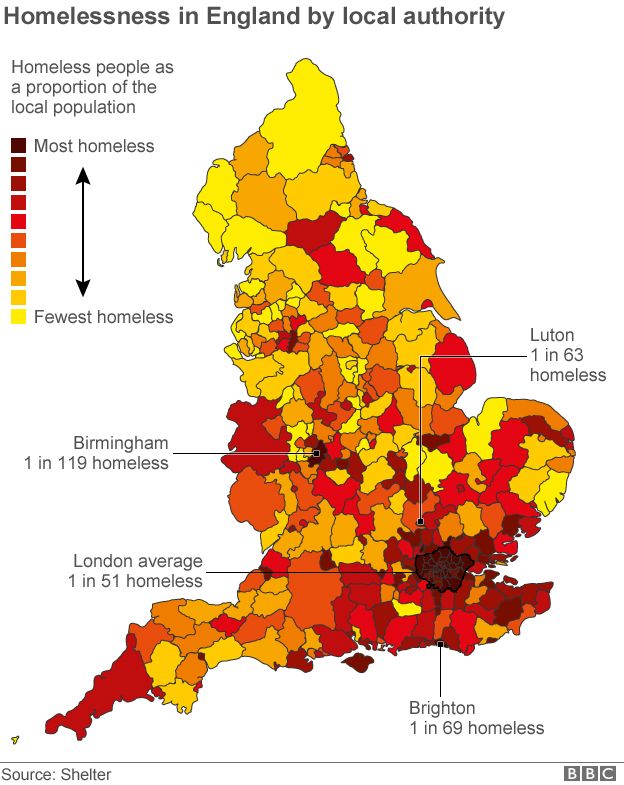
The new Green Book also identified the country’s top 50 ‘homelessness hotspots’ where people are most likely to lose the battle to stay in their homes. Westminster topped the list with 1 in 25 people living without a home. This was followed by Newham (1 in 27), Haringey (1 in 28), and Kensington and Chelsea (1 in 30).
But the homelessness epidemic stretches far beyond the Capital. Areas such as Luton, with 1 in 63 people living without a home, Brighton (1 in 69) and Birmingham (1 in 119) also made it into the country’s top homelessness hotspots.
Shelter’s chief executive, Campbell Robb, said: “Shelter’s founding shone a light on hidden homelessness in the sixties slums. But while those troubled times have faded into memory, fifty years on a modern day housing crisis is tightening its grip on our country.
“Hundreds of thousands of people will face the trauma of waking up homeless this Christmas. Decades in the making, this is the tragic result of a nation struggling under the weight of sky-high rents, a lack of affordable homes, and cuts to welfare support.
“We all face the consequences when so many in our country grow up without a place to call home. It breaks up communities and wreaks havoc on family life. For the sake of future generations we must pull together to end this crisis, and refuse to rest until every child has a place to call home.”
Shelter’s co-founder Des Wilson said: “It would be pleasing if Shelter were able to take time to celebrate its 50th year, but, as this report shows, it is too aware of what still has to be done. I hope the country will respond to its urgent rallying call with the same combination of anger and compassion with which it supported our work all those years ago.”
Cllr Martin Tett, the Local Government Association’s housing spokesman, said: “It is a tragedy when anyone becomes homeless. Councils want to end homelessness and are already doing everything they can within existing resources to prevent and tackle it.
“Funding pressures are combining with a lack of affordable housing and rents continuing to rise above household incomes to leave many councils struggling to cope with rising homelessness across all areas of the country.
“Councils need powers and funding to address the widening gap between incomes and rents, resume their historic role as a major builder of new affordable homes and join up all local services – such as health, justice and skills. This is the only way to deliver our ambition to end homelessness.”
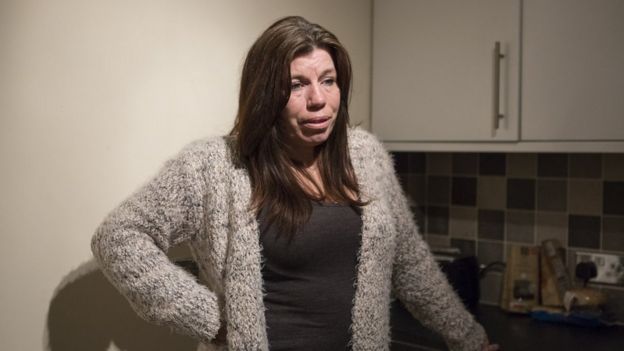
Case study: Mandie was renting a flat in Luton with her two daughters, but after being made redundant she fell behind on the rent and was evicted. Since becoming homeless, the family has been surviving by either sofa surfing, or living in emergency hotels or temporary accommodation.
Mandie says: “It’s terrifying how quickly you can lose everything – first my job, then my home, and almost my children. Our last real home was a damp, expensive two-bedroom flat, but at least it was ours. After we were thrown out, I went to stay with a friend for a couple of weeks but we needed a place of our own.
“The council put us in emergency accommodation and I had to apply for housing benefit to pay for it. But it took ages to come through and by the time I had the money, the council said I was ‘intentionally homeless’ and they didn’t have to help anymore. They referred me to social services, who threatened to take my children off me. It was horrifying.
“But finally the council agreed to house us again. We stayed in a hotel for months and now we’re in temporary accommodation. I don’t know where we’ll end up next, or when we’ll be able to have a home to call our own.
“This year my daughters agreed to cancel Christmas. They’re normally hyped about it, but I think they’re trying to take the pressure off me. The only thing they asked for was whether we could still have a turkey dinner.”
To support Shelter’s urgent Christmas appeal and help families like Mandie’s please visit
www.shelter.org.uk or text SHELTER to 70555 to donate £3.
http://www.24housing.co.uk/news/over-250000-homeless-in-england/
"The name HOLMES is said to be a very common surname in the northern half of England: it comes from the Old Norse word holmr meaning 'island in a river.'In Scotland it usually has a specific derivation from the lands of Holmes near Dundonald in Ayrshire; Joannes Homys is recorded in Ayr in 1460.There was a James Hoomes in Verness in 1668.Most Scottish Holmes are now in the big cities, and their names are probably of English origin. --
from:
Collins Pocket Reference
SCOTTISH SURNAMES
by David Dorward
Clan Home/Hume of Scotland has many variations in the spelling including some spelling their name Holmes.
Clan Home/Hume of Scotland has many variations in the spelling including some spelling their name Holmes.
Black, in his classic work, Surnames of Ireland, has pointed out that whenever the name Holmes is found in Ireland it is more often of Scottish origin than English.The Scottish origin of the name far surpassesthe English origin when found in Ireland.(I do not have those copied pages at hand so I cannot quote him.)It must be kept in mind that when the English began planting plantations in Ulster many of the Irish may have Anglicized their names or even changed their surname to avoid "problems."Ulster, no doubt, is where the name Holmes is probably found in abundance.
Black, in his classic work, Surnames of Ireland, has pointed out that whenever the name Holmes is found in Ireland it is more often of Scottish origin than English.The Scottish origin of the name far surpassesthe English origin when found in Ireland.(I do not have those copied pages at hand so I cannot quote him.)It must be kept in mind that when the English began planting plantations in Ulster many of the Irish may have Anglicized their names or even changed their surname to avoid "problems."Ulster, no doubt, is where the name Holmes is probably found in abundance.
My mother was a Holmes and descended from Elisha Holmes.According to one record Elisha Holmes was born on July 6th, 1773 in Ireland.Family tradition says he was born in Northern Ireland.He is said to have come to America as a small lad with his father, believed to be John Holmes (though possibly James).His mother's name is unknown.Whether she were still alive when they made the journey is also unknown.Some say the family entered America through Virginia but they did not stay there.They made their home in Wilkes County (later named Lincoln in honour of a colonial sympathizer in Parliament), Georgia.In about 1814 Elisha Holmes left Georgia and traveled with his family along the Lower Federal Road to the Mississippi Territory where he settled in what is today Walthall County, Mississippi.Dr. Wendell B. Holmes, the family genealogist, has compiled the family genealogy and says there are recorded more than 15,000 descendants today from this one man.We cannot make a connection with his father (having so common a name) to any particular place in Ulster within the given time frame.They may have came to the colonies right before the War for Independence broke out.I cannot imagine them coming during the war and Elisha would no longer be a "small lad" by the time of the war's end.
My mother was a Holmes and descended from Elisha Holmes.According to one record Elisha Holmes was born on July 6th, 1773 in Ireland.Family tradition says he was born in Northern Ireland.He is said to have come to America as a small lad with his father, believed to be John Holmes (though possibly James).His mother's name is unknown.Whether she were still alive when they made the journey is also unknown.Some say the family entered America through Virginia but they did not stay there.They made their home in Wilkes County (later named Lincoln in honour of a colonial sympathizer in Parliament), Georgia.In about 1814 Elisha Holmes left Georgia and traveled with his family along the Lower Federal Road to the Mississippi Territory where he settled in what is today Walthall County, Mississippi.Dr. Wendell B. Holmes, the family genealogist, has compiled the family genealogy and says there are recorded more than 15,000 descendants today from this one man.We cannot make a connection with his father (having so common a name) to any particular place in Ulster within the given time frame.They may have came to the colonies right before the War for Independence broke out.I cannot imagine them coming during the war and Elisha would no longer be a "small lad" by the time of the war's end.
Should Divine Providence uncover and place into anyone's hands the specific origin of Elisha Holmes and his father, John (or James), in Northern Ireland our family would be very interested and glad to receive the knowledge you have.It would indeed be Providential to uncover such a rare discovery at this late date.May the Lord bless you.My best wishes,
Should Divine Providence uncover and place into anyone's hands the specific origin of Elisha Holmes and his father, John (or James), in Northern Ireland our family would be very interested and glad to receive the knowledge you have.It would indeed be Providential to uncover such a rare discovery at this late date.May the Lord bless you.My best wishes,
http://www.therichest
.com/rich-list/poorest-list/the-15-most-homeless-cities-in-the-world
 www.photoree.com
Most of the homeless people in Portugal are concentrated in the cities of Lisbon and Porto. Reports say that around 300 homeless people sleep on the streets of Lisbon every night. Today, members of the Comunidade Vida e Paz are persuading the homeless population of Lisbon to take part in rehabilitation programs in order to improve the quality of their lives.
 www.denverpost.com
According to the 2012 Point in Time report from Metro Denver Homeless Initiative, Denver saw an increase in it’s homeless population from 411 to 964 between the years of 2011 and 201223
 www.nuvo.net
There are as many as 2,200 homeless people every night in the city of Indianapolis, which is equivalent to around 15,000 over the course of a year. Thought this city is known for its faith-based shelters, there’s just not enough shelters to provide a place for the entire homeless population.
 www.theguardian.com
In a recent study shows that about seven people per day become homeless in Dublin. In 2013, there were about 2,366 people that were reported to be sleeping on the streets of Dublin every night. The government’s failure to increase the stock of social housing is said to be the root cause of this social problem.
 www.zimbio.com
Rio De Janeiro is known for having a high homelessness rate with over 2,500 homeless people as of last year.